The Basque Waist Is Back: Why the ’80s Silhouette Is Taking Over Autumn 2026
Fashion is looking to the past once again—and this time, the waist is the star. The Basque waist, a dramatic silhouette in which the bodice extends below the natural waist and often dips into a V toward the hips, is emerging as one of the defining fashion trends for Autumn/Winter 2026. British Vogue has highlighted the return of the silhouette, noting its strong connection to the 1980s as well as its much older history in fashion. The trend is now appearing across contemporary runway collections, giving a distinctly retro shape a modern update. For RAMP Studio, the comeback is particularly interesting because it captures one of fashion’s biggest ongoing movements: the revival of recognizable vintage silhouettes through a modern lens.
What Is a Basque Waist?
A Basque waist is a fitted bodice that extends below the natural waistline, usually forming a pointed or curved drop toward the hips. The silhouette creates a longer-looking torso and emphasizes the transition between the waist and hips.
It can appear on:
- Dresses
- Gowns
- Corset-style tops
- Jackets
- Eveningwear
- Bridalwear
- Tailored pieces
- Skirts and coordinated sets
The shape can be romantic, dramatic, structured or minimalist depending on the fabric and construction.
While the silhouette is strongly associated with 1980s fashion today, its history stretches much further back. British Vogue and Vogue Arabia both point to earlier versions of the style in historical dress, before its major revival in the 1980s.
Why Is the Basque Waist Trending Again?
Fashion rarely brings back a trend exactly as it was.
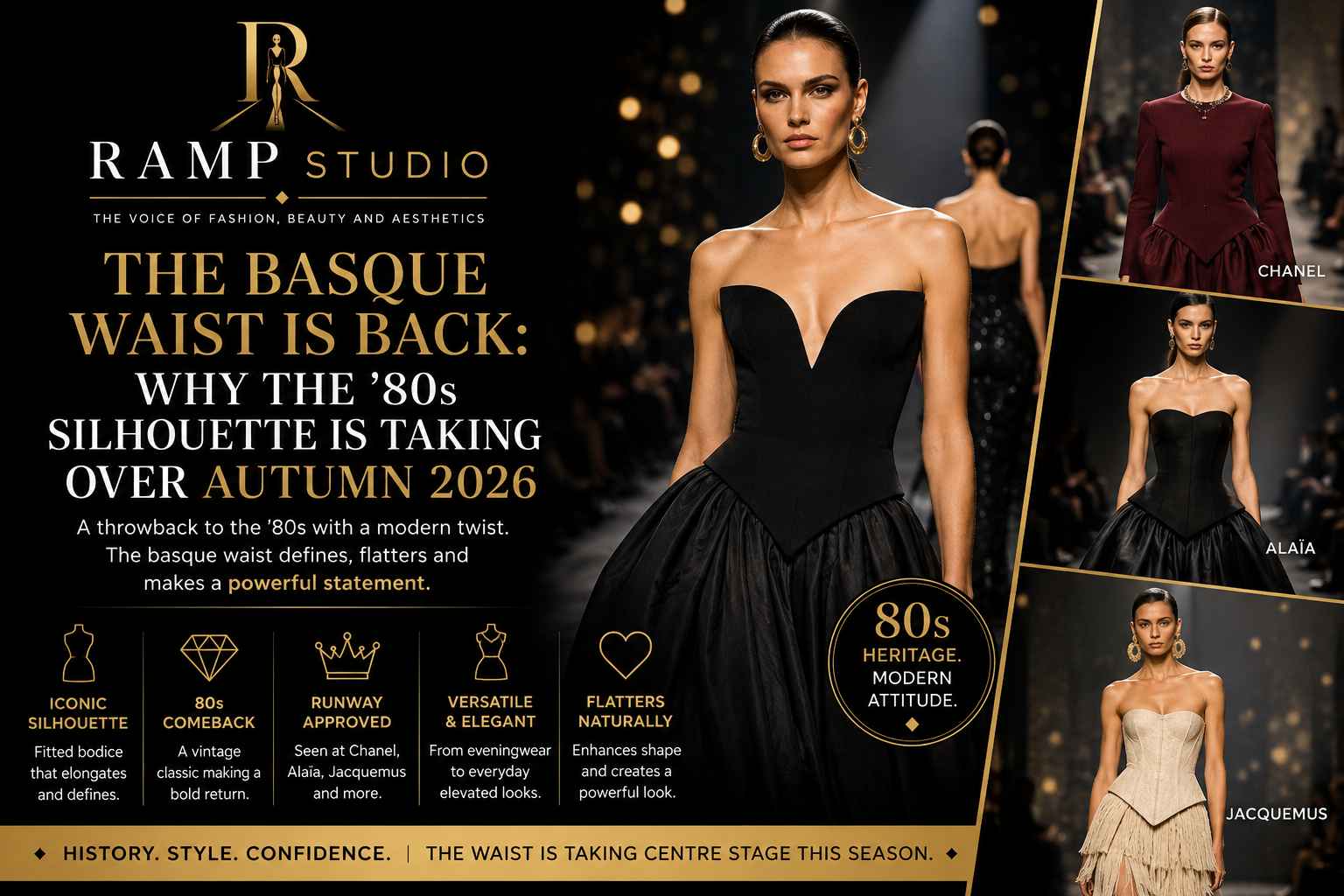
Instead, designers take familiar ideas and reinterpret them for a new generation. The Autumn/Winter 2026 collections are doing precisely that with the Basque waist. According to British Vogue’s current trend report, designers including Chanel, Alaïa and Jacquemus have incorporated variations of the elongated waist and drop-waist silhouette into their collections. That runway attention is helping transform the Basque waist from a niche vintage reference into a trend that can influence mainstream autumn dressing.
The ’80s Influence Is Back
The 1980s remain one of fashion’s most frequently revisited decades.
Think:
- Defined waists
- Structured shoulders
- Dramatic eveningwear
- Full skirts
- Bold proportions
- Statement tailoring
- Glamorous silhouettes
The Basque waist fits naturally into that aesthetic.
Its dramatic shape can create the kind of powerful silhouette associated with 1980s fashion while still looking contemporary when paired with simpler accessories or modern fabrics.
Princess Diana Helped Define the Look
Few people are more strongly associated with the 1980s Basque-waist aesthetic than Princess Diana. British Vogue notes that the silhouette became one of her recognizable fashion signatures during the decade. Her interpretation often combined a fitted upper body with a fuller skirt, creating a distinctly romantic yet structured silhouette. That historical association gives today’s revival an additional layer of nostalgia. But today’s designers aren’t simply copying Diana’s wardrobe. They’re taking the idea of the elongated waist and translating it into contemporary eveningwear, tailoring and fashion-forward silhouettes.
Designers Are Giving the Trend a Modern Update
The current revival isn’t limited to traditional ballgowns.
British Vogue’s report highlights several different interpretations.
Chanel
Chanel’s Autumn/Winter 2026 collection included drop-waist burgundy dresses, giving the silhouette a sophisticated and modern interpretation.
Alaïa
Alaïa explored the shape through strapless gowns and dramatic proportions, emphasizing the relationship between the waist and hips.
Jacquemus
Jacquemus offered a more overtly 1980s-inspired interpretation, combining fitted bodices with playful, voluminous detailing and fringe.
Together, these examples demonstrate why the trend feels fresh rather than simply nostalgic.
From Bridalwear to Everyday Fashion
The Basque waist has traditionally been particularly visible in bridalwear and formal gowns. Its structured shape naturally lends itself to wedding dresses because it can create a defined waistline while allowing the skirt to expand dramatically below it. But the 2026 revival is pushing the silhouette beyond bridal fashion.
Designers are incorporating the shape into:
- Cocktail dresses
- Day-to-night dresses
- Structured tops
- Jackets
- Corset-inspired pieces
- Evening separates
Vogue Arabia similarly describes the trend as moving from its association with wedding dresses toward broader fashion applications.
Why the Shape Feels So Dramatic
The Basque waist changes the proportions of an outfit. Instead of ending exactly at the body’s natural waist, the bodice continues downward. This can create the visual impression of:
A longer torso + defined waist + emphasized hips
That makes the silhouette particularly effective for statement dressing.
It can also be softened.
A minimalist Basque-waist dress in a single colour can look elegant and understated, while a corseted version with a dramatic skirt can feel distinctly theatrical.
How to Wear the Basque Waist in Autumn 2026
You don’t need to wear a full 1980s-inspired gown to participate in the trend.
1. Try a Basque-Waist Dress
The easiest option is a dress featuring a subtle pointed waist.
Keep accessories simple and allow the silhouette to be the focus.
2. Pair It With Modern Shoes
A sleek pump, pointed flat or contemporary boot can prevent the outfit from feeling like a costume.
3. Choose Minimal Jewellery
Because the silhouette itself creates visual interest, understated jewellery can work particularly well.
4. Try a Structured Jacket
For a more wearable interpretation, look for jackets or tailored pieces with an elongated, shaped waist.
5. Go Tonal
A single colour from top to bottom can make the silhouette feel more modern and sophisticated.
Basque Waist vs Peplum: What’s the Difference?
The two trends can look similar, but they aren’t the same.
A Basque waist extends the bodice downward, often forming a pointed or curved shape below the natural waist.
A peplum is typically a flared section of fabric attached around the waist or hips.
Both emphasize the waist and hips, but they create different proportions.
Interestingly, the return of the Basque waist comes alongside a wider interest in historical and structured silhouettes. Earlier 2026 runway coverage also identified the return of the peplum as an important Autumn/Winter trend.
Is the Basque Waist Flattering?
Like any fashion silhouette, it depends on the garment’s construction and the person wearing it.
The Basque waist can visually emphasize the waist and create a strong transition toward the hips.
However, there isn’t one universally “flattering” silhouette.
The best approach is to consider:
- Where the waist point sits
- The length of the bodice
- Skirt volume
- Fabric weight
- Neckline
- Overall proportions
- Personal comfort
Fashion should be about finding a silhouette that works for your style and proportions, rather than following a trend exactly as shown on a runway.
Why Vintage-Inspired Fashion Keeps Returning
The Basque waist comeback is part of a larger fashion cycle.
Designers frequently revisit previous decades because historical fashion provides recognizable shapes that can be transformed through new materials, styling and proportions.
In 2026, that nostalgia is particularly visible through:
- ’80s silhouettes
- ’70s denim
- Structured tailoring
- Retro footwear
- Vintage-inspired eveningwear
- Corset references
- Dramatic proportions
The Basque waist fits neatly into this broader movement.
The Return of the Defined Waist
For several years, oversized and relaxed silhouettes dominated much of fashion.
Now, designers are increasingly bringing attention back to the waist.
This doesn’t necessarily mean the end of relaxed dressing.
Instead, the fashion conversation is becoming more diverse.
One wardrobe can include:
Oversized tailoring + low-slung trousers + fitted dresses + structured waistlines.
The Basque waist represents the more sculptural side of that equation.
Why This Trend Could Be Bigger Than a Seasonal Moment
Some trends disappear after one season.
Others influence fashion for several years.
The Basque waist has several characteristics that could help it remain relevant:
- Strong historical identity
- Connection to bridalwear
- Celebrity and cultural nostalgia
- Runway visibility
- Adaptability to different garments
- Compatibility with eveningwear
- Strong visual impact
Its return also arrives during a broader fashion movement toward defined silhouettes and historical references.
That makes it more than simply another microtrend.
What Makes the 2026 Version Different?
The biggest difference is restraint.
The original 1980s aesthetic could be extremely dramatic.
The 2026 interpretation can be much cleaner.
Instead of combining a Basque waist with every possible retro element, designers are experimenting with:
Modern fabrics + clean styling + historical silhouettes.
That’s what makes the trend feel current.
A Basque-waist dress doesn’t have to look like an archival costume.
With the right fabric, colour and accessories, it can look completely contemporary.
Frequently Asked Questions
What is a Basque waist?
A Basque waist is a clothing silhouette where the fitted bodice extends below the natural waist, often forming a pointed or curved shape toward the hips.
Is the Basque waist an ’80s trend?
It is strongly associated with 1980s fashion, but the silhouette has much older historical roots. It became particularly recognizable during the 1980s through structured dresses and eveningwear.
Is the Basque waist trending for Autumn 2026?
Yes. British Vogue has identified the Basque waist as a significant Autumn/Winter 2026 trend, with designers including Chanel, Alaïa and Jacquemus presenting contemporary versions.
Did Princess Diana wear the Basque waist?
Yes. Princess Diana was particularly associated with the silhouette during the 1980s, helping make the defined, elongated waist a recognizable part of her fashion image.
Is the Basque waist only suitable for wedding dresses?
No. Although the silhouette has a strong bridal and eveningwear history, designers are now using it across contemporary dresses, tops, jackets and other fashion pieces.
How can I wear a Basque waist casually?
Look for a subtle Basque-waist top or structured jacket and combine it with simple trousers, denim or a contemporary skirt. Keeping the rest of the outfit understated can make the silhouette feel more modern.
Is Basque waist the same as a peplum?
No. A Basque waist extends the bodice below the natural waist, while a peplum usually refers to a flared section of fabric attached around the waist or hips.
What should I wear with a Basque-waist dress?
Simple accessories work well. Depending on the occasion, consider pointed shoes, sleek boots, minimal jewellery or a structured handbag.
Why is 1980s fashion returning in 2026?
Designers are revisiting historical silhouettes and updating them with contemporary fabrics, proportions and styling. The Basque waist is one example of this wider nostalgia-driven fashion movement.
Final Thoughts
The Basque waist is officially having a fashion moment again.
What was once strongly associated with 1980s glamour—and with historical dress long before that—is being reinterpreted for a new generation.
From Chanel’s burgundy drop-waist dresses to Alaïa’s sculptural gowns and Jacquemus’s playful take, the Autumn/Winter 2026 collections demonstrate how versatile the silhouette can be.
The secret to its comeback isn’t simply nostalgia.
It’s reinvention.
The 2026 Basque waist feels less like a costume from another decade and more like a sophisticated way to bring shape, structure and drama back into the modern wardrobe.
And if the current runway direction is any indication, the waist is about to become one of autumn’s biggest fashion stories.
Sources
- British Vogue — The Basque Waist Is The ’80s Silhouette Taking Over This Autumn
- Vogue Arabia — Basque Waist: The ’80s Dress Trend Taking Over Autumn 2026
- Vogue Arabia — Trends That Defined Paris Fashion Week Autumn/Winter 2026
- British Vogue — Fashion, Trends & Latest News
Views: 1