The Glass Skin Warning:
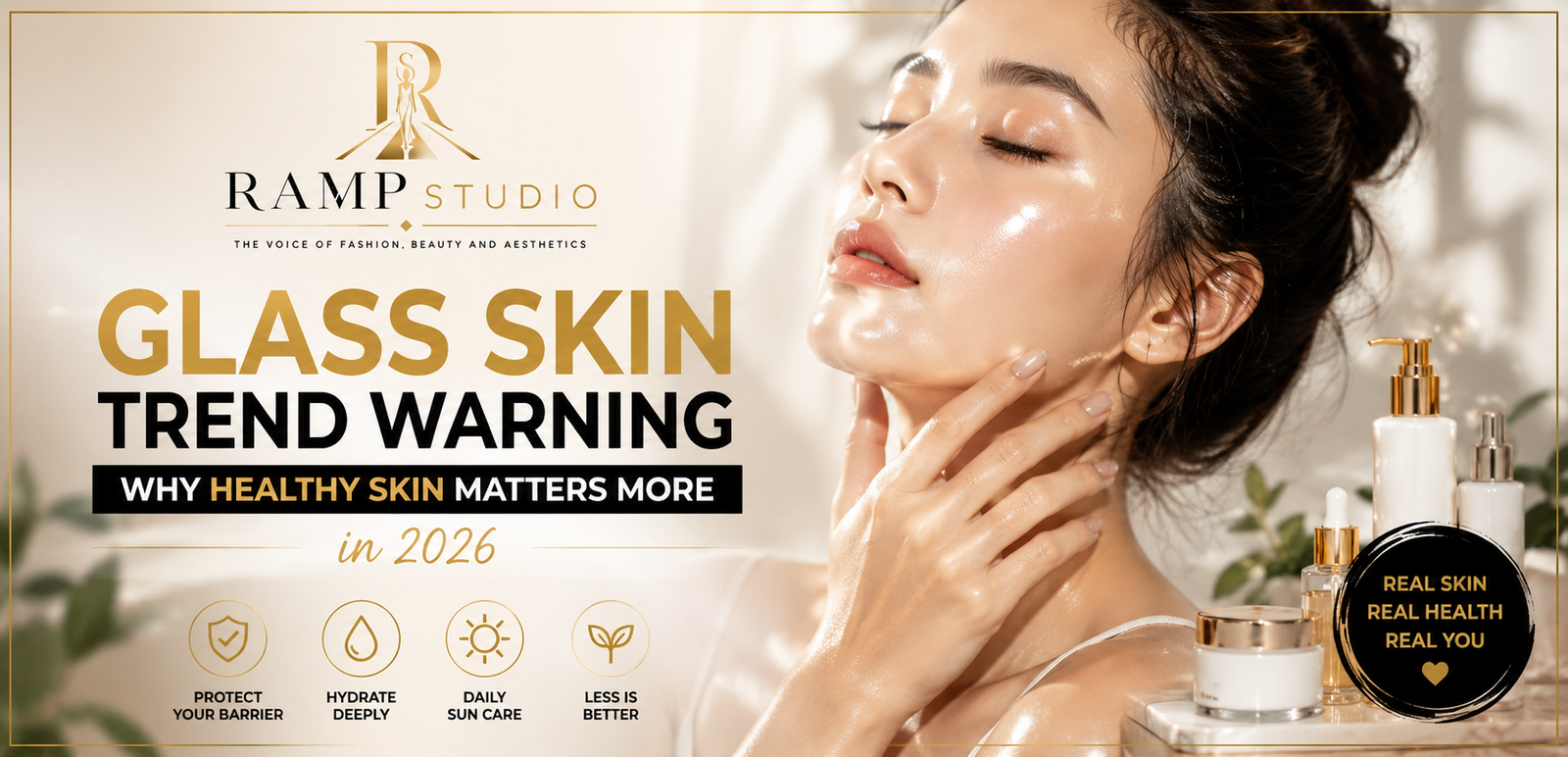
The pursuit of perfectly smooth, luminous “glass skin” has become one of the most recognizable skincare trends on social media. But as the trend continues to dominate beauty conversations, dermatologists are warning that trying to recreate an ultra-smooth, poreless appearance can sometimes lead to the opposite of healthy skin. Recent coverage has highlighted concerns about aggressive exfoliation, excessive use of active ingredients, and complicated routines promoted online. Dermatologists are encouraging people to focus on skin-barrier health, hydration and consistent sun protection rather than trying to achieve an unrealistic, filter-like complexion.
What Is “Glass Skin”?
“Glass skin” generally describes a complexion that looks exceptionally smooth, hydrated, clear and luminous.
The trend has strong roots in Korean beauty culture and has spread globally through TikTok, Instagram and other social platforms. A typical glass-skin routine may involve multiple layers of cleansers, toners, essences, serums, moisturizers and exfoliating products. The idea itself isn’t necessarily unhealthy. Hydrated, well-cared-for skin can naturally look smoother and more radiant. The problem begins when the pursuit of perfection encourages people to over-treat their skin.
Why the Trend Is Raising Concerns
The latest warning isn’t really about glass skin itself. It’s about the increasingly aggressive routines people may use to achieve it.
Combining frequent exfoliation, dermaplaning, acid-based products, retinoids and multiple active ingredients can irritate the skin, particularly when products are introduced too quickly or layered without considering individual skin needs. Recent dermatologist commentary has specifically warned that combining aggressive exfoliation methods can contribute to over-exfoliation, sensitivity and inflammation. In other words, more skincare doesn’t automatically mean better skin.
Your Skin Barrier Matters More Than a Filter
The skin barrier is the outer protective layer of the skin. It helps reduce water loss and protects the skin from environmental stressors.
When the barrier is compromised, people may experience symptoms such as:
- Dryness
- Tightness
- Redness
- Burning or stinging
- Increased sensitivity
- Flaking
- Irritation
That is why the current skincare conversation is increasingly shifting toward barrier-first routines. Cleveland Clinic notes that strengthening the skin barrier, simplifying routines and minimizing potentially irritating products remain important skincare approaches. It also recommends gentle, fragrance-free products, regular moisturizing and daily broad-spectrum sunscreen with SPF 30 or higher.
The New Skincare Philosophy: Less, But Better
The latest movement in skincare isn’t necessarily about abandoning active ingredients.
Instead, it is about being more selective.
A simple routine can often provide a strong foundation:
1. Gentle Cleanser
Choose a cleanser appropriate for your skin type without unnecessarily stripping the skin.
2. Moisturizer
A good moisturizer can help support hydration and the skin barrier. Ingredients such as ceramides and humectants can be useful depending on individual skin needs.
3. Sunscreen
Daily sun protection remains one of the most important skincare habits.
Modern sunscreens are also becoming more sophisticated, with formulas combining UV protection with ingredients designed to support hydration, brightening and barrier care.
4. Targeted Treatments
If you want to address acne, pigmentation, fine lines or another specific concern, introduce targeted ingredients carefully rather than adding several powerful products at once.
Are Exfoliating Acids Bad for Your Skin?
Not necessarily.
AHAs, BHAs and other exfoliating ingredients can have useful applications, but the frequency and formulation matter. The problem is overuse. A person who combines an exfoliating acid with retinoids, scrubs, dermaplaning and other active treatments may be placing unnecessary stress on their skin. Recent dermatologist guidance around exfoliation emphasizes starting slowly and adjusting frequency according to how the skin responds. If your skin begins burning, becoming unusually red or feeling persistently irritated, that’s a reason to reassess the routine rather than adding another active.
The Reality Behind “Perfect” Skin
Another issue with the glass-skin trend is that social media can create unrealistic expectations. Lighting, camera settings, filters, makeup and editing can dramatically change how skin appears in photographs and videos.
Real skin has:
- Pores
- Texture
- Fine lines
- Pigmentation
- Occasional blemishes
- Natural variations
Dermatologists have emphasized that visible pores and normal skin variation are not signs of unhealthy skin.
Healthy skin doesn’t have to look like a glass surface.
Korean Beauty Is Also Evolving
Interestingly, the answer isn’t necessarily to abandon Korean skincare.
One of the philosophies associated with J-beauty and K-beauty is actually becoming increasingly relevant to the current conversation: support the skin rather than constantly trying to “fix” it. Dermatologist commentary on Japanese skincare notes an emphasis on hydration, barrier support and long-term maintenance rather than aggressive treatment.
That approach fits perfectly with the broader movement toward simpler, more sustainable skincare.
What About Skin Microbiome Skincare?
Another major scientific direction gaining attention is the skin microbiome. Research continues to explore the relationship between the skin’s microbial communities, the skin barrier, inflammation and aging. A review published in Frontiers in Microbiology on August 20, 2026, examined the skin microbiome and its relationship with skin aging, dermatological conditions and potential clinical applications. This doesn’t mean consumers should immediately buy every product labeled “microbiome” or “probiotic.” Instead, it shows how skincare science is increasingly looking beyond surface appearance and toward the biological health of the skin.
The Future of Skincare May Be “Healthy Skin” Instead of “Perfect Skin”
The biggest lesson from the latest glass-skin conversation may be surprisingly simple:
Your skincare routine should improve the health and comfort of your skin—not punish it in pursuit of perfection.
The industry is already seeing increased interest in streamlined routines, skin longevity and barrier-focused formulations.
That means the future of skincare may be less about having 10 or 15 products and more about choosing the right products for your individual skin.
A Better Approach to the Glass-Skin Trend
If you love the luminous glass-skin aesthetic, you don’t necessarily have to give it up.
Instead, focus on the fundamentals:
Hydrate. Keep the skin comfortably moisturized.
Protect. Use broad-spectrum sunscreen consistently.
Exfoliate carefully. Avoid stacking multiple exfoliating treatments without a reason.
Introduce actives slowly. Give your skin time to adjust.
Listen to your skin. Burning and persistent irritation aren’t signs that a product is “working.”
Keep it realistic. Healthy skin can still have pores and texture.
Final Thoughts
The latest skincare conversation isn’t really about whether glass skin is good or bad.
It’s about how we pursue it.
A radiant complexion can be part of healthy skincare, but chasing an unrealistic, perfectly smooth appearance can encourage excessive exfoliation and product overload.
In 2026, the smarter skincare trend may be one that puts skin health before skin perfection.
Because the best complexion isn’t necessarily the one that looks like glass.
It’s the one that feels healthy, comfortable and resilient.
Frequently Asked Questions
Is glass skin bad for your skin?
The glass-skin look itself isn’t inherently harmful. The concern is that aggressive routines used to achieve it can cause irritation or damage the skin barrier.
How can I get glowing skin without overdoing my routine?
Focus on gentle cleansing, regular moisturizing, appropriate targeted treatments and daily sun protection. Consistency is generally more useful than constantly adding products.
Can exfoliating damage the skin barrier?
Yes. Excessive or overly aggressive exfoliation can cause irritation and compromise the skin barrier. How often someone should exfoliate depends on their skin type and the products being used.
Do I need a 10-step skincare routine for glass skin?
No. A long routine isn’t automatically better. A simple, consistent routine can provide an effective foundation for healthy-looking skin.
Are visible pores normal?
Yes. Pores are a normal part of human skin. Social-media images can create unrealistic expectations about completely poreless skin.
What is the most important skincare habit?
Daily sun protection is one of the most important habits for helping protect skin from UV damage. Cleveland Clinic recommends broad-spectrum SPF 30 or higher.
Sources
- News.com.au — Dermatologists warn about the glass-skin trend
- Cleveland Clinic — Skin Care Trends: What’s New and What to Avoid
- Forefront Dermatology — Is “Glass Skin” Good or Bad?
- Frontiers in Microbiology — Skin microbiome and cutaneous aging
- Vogue — SPF Is Finally Getting Its Time in the Sun
SEO Title: Glass Skin Trend Warning: Why Healthy Skin Matters More in 2026
Meta Description: The glass skin trend is everywhere, but dermatologists warn against over-exfoliation and complicated routines. Discover a safer, barrier-first approach to glowing skin in 2026.
URL Slug: glass-skin-trend-warning-healthy-skin-2026
Category: Skincare
Tags: Glass Skin, Skincare Trends 2026, Skin Barrier, Skincare Tips, Dermatology, K-Beauty, Healthy Skin, Exfoliation
Views: 0